2026 equipment update. HD-Wave is several product generations old. SolarEdge’s current US residential single-phase line is marketed as SolarEdge Home Wave, alongside current S-series power optimisers and the SolarEdge Home Battery. We install SolarEdge where it is the right answer. The current lineup, the warranty terms and an honest note on the company are at the end of this article.
SolarEdge HD-Wave Technology
SolarEdge’s single-phase inverter with HD-Wave technology, winner of the prestigious 2016 Intersolar award and the renowned 2018 Edison Award, breaks the mold of traditional inverters.
Peace of Mind
SolarEdge HD-Wave power optimizers and inverters come with a built-in direct current (DC) safety switch, integrated rapid shutdown (approved for WA & Oregon regulatory markets), and a standard 12-year warranty with an option to increase to 25 years.
Advanced Monitoring
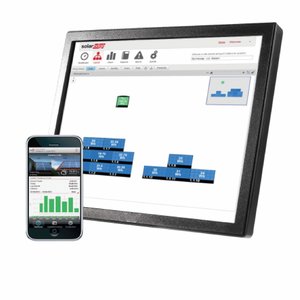
Every SolarEdge system further benefits from free, advanced monitoring tracking the performance of each of the modules in your system at all times, bringing you updates on your system performance anytime, anywhere.
Power Your EV With Sunlight
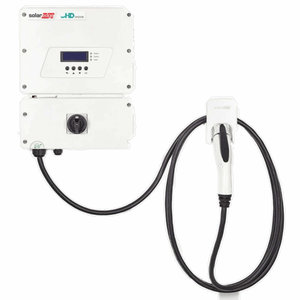
SolarEdge’s EV charging single-phase inverters offer homeowners the ability to charge their electric vehicles up to 6 times faster than a standard Level 1 charger. This is accomplished through an innovative solar boost mode that charges the EV using utility and solar energy at the same time.
For business owners, build customer loyalty by providing a place for your customers to fill up their EVs with clean solar energy from your store.
Where HD-Wave sits in 2026
HD-Wave was a genuinely significant inverter when it launched. It replaced the heavy transformer in a conventional inverter with a switching design that cut the size and weight dramatically and pushed efficiency up. If you have one on your garage wall, it is a good piece of equipment and there is no reason to replace it while it works.
It is no longer the current product. SolarEdge’s US residential single-phase marketing now centres on the SolarEdge Home Wave inverter line, roughly 3 kW to 11.4 kW. Older HD-Wave models still appear at distributors, so you may see both names quoted; treat Home Wave as the current family.
The current SolarEdge lineup
- Home Wave inverters, 3–11.4 kW for single-phase residential.
- S-series power optimisers, S440, S500B and S650B, up to 99.5% maximum efficiency, each carrying a 25-year warranty.
- SolarEdge Home Battery 400V, 9.7 kWh usable per unit, stackable up to three per inverter, 5 kW continuous and 7.5 kW peak, DC-coupled with round-trip efficiency around 94.5%.
Warranty, stated plainly
Inverters carry 12 years as standard, extendable to 20 or 25 years for a one-time purchase that must be made within 36 months of shipment. Optimisers carry 25 years as standard. That asymmetry is worth knowing at quote time rather than in year 13, if you want inverter cover to match the panels, the moment to buy it is early.
Optimisers, string design and shade. The local question
SolarEdge sits between a plain string inverter and microinverters. Panels still feed one central inverter, but each panel gets an optimiser that manages its output individually. So a shaded panel does not drag its string down the way it would on a conventional system.
That matters here for the same reason microinverters do. The constraint on most roofs between Vancouver and Portland is a mature Douglas fir, not a shortage of sun. Any architecture that isolates a shaded module is worth more in Clark County than it would be on an unobstructed roof in the desert.
Where SolarEdge is the better choice than microinverters
- Larger arrays, where one central inverter is more cost-effective than thirty microinverters.
- Commercial and larger residential systems, where the string architecture scales more economically.
- DC-coupled battery designs, which avoid an extra conversion step between panels and storage.
- Homeowners who prefer the electronics at eye level. The inverter is on a wall you can reach, not on a roof you cannot access for four months of the year.
And where it is not
On a complex roof broken into several small faces, per-panel AC conversion is usually the cleaner design. And a central inverter is a single point of failure in a way a microinverter system is not: if it goes down, the whole array goes down, whereas a failed microinverter costs you one panel. Neither of those is a reason to rule SolarEdge out; both are reasons the choice should be made per roof.
An honest note on SolarEdge as a company
You should know this before you commit to a 25-year relationship with any manufacturer. SolarEdge went through a severe downturn: roughly a $1.8 billion net loss in 2024, narrowing to about $405 million in 2025, driven by inventory oversupply and a collapse in demand.
The recovery is real but not complete. In the second quarter of 2026 revenue rose about 20% year over year to $346 million, and the company returned to non-GAAP operating profitability for the first time since 2023, though it is still posting a GAAP operating loss. Net cash improved to around $265 million.
Our reading: there is no evidence of warranty claims being denied or delayed, and the balance sheet is healthier than it was. But we are not going to tell you the risk is zero, because a company that lost $1.8 billion in a year has earned a second look. If a 25-year inverter warranty is the thing you are counting on, buy the extension early and keep your paperwork. Advice that applies to every brand, and to this one in particular.
Is the SolarEdge HD-Wave inverter still available?
HD-Wave is several generations old. SolarEdge’s current US residential single-phase line is marketed as SolarEdge Home Wave, roughly 3 to 11.4 kW, though older HD-Wave stock still appears through some distributors.
How long is the SolarEdge warranty?
Inverters come with 12 years as standard, extendable to 20 or 25 years for a one-time purchase made within 36 months of shipment. Power optimisers carry 25 years as standard.
Is SolarEdge better than Enphase for a shaded roof?
Both isolate shaded panels — SolarEdge with optimisers, Enphase with microinverters. SolarEdge often suits larger arrays and DC-coupled batteries; Enphase often suits complex roofs split across several small faces.
What happens if my SolarEdge inverter fails?
The whole array stops producing until it is replaced, because it is a single central inverter. That is the main architectural difference from microinverters, where a failure costs you one panel.
Is SolarEdge financially stable in 2026?
It went through a severe downturn, with roughly a $1.8 billion loss in 2024 and about $405 million in 2025, and returned to non-GAAP operating profitability in the second quarter of 2026 with net cash around $265 million. There is no evidence of warranty claims being denied, but it is fair to call the recovery incomplete.
Should I replace a working HD-Wave inverter?
No. A functioning inverter should be run until it fails or until you are reconfiguring the system for a battery or an expansion.
Want a straight recommendation between SolarEdge and Enphase for your roof? Call us at 360-313-7190 or request a free quote.