Is My Roof Right for Solar? A Homeowner’s Guide
One of the most common and important questions we hear is, “Is my roof actually right for solar panels?” It’s a crucial first step on the path to energy independence. While a detailed, professional assessment is the only way to know for sure, this guide will walk you through the four key factors we evaluate to determine your home’s solar potential.
Let’s dive into what makes a roof ideal for generating clean, affordable energy.
Factor 1
The Age and Condition of Your Roof
Think of your roof as the foundation for your solar energy system. You wouldn’t build a new house on a shaky foundation, and similarly, we want to install your long-lasting solar panels on a roof with plenty of life left. Our solar installations come with a 25-year product warranty and a 10-year craftsmanship warranty, so it’s essential your roof is prepared for the long haul.
- Ideal: A roof that is less than 10 years old is in a prime condition for a solar installation. It has significant life remaining, making it a solid, worry-free candidate.
- Consideration: If your roof is between 11-15 years old, it’s entering a gray area. Depending on the material and its condition, it might be more cost-effective to plan for a roof replacement before or around the same time as your solar installation.
- Action Required: For roofs over 15 years old, we almost always recommend a roof replacement before going solar. Installing a brand-new solar system on an old roof means you’ll have to pay for the costly process of removing and reinstalling the panels when your roof inevitably needs to be replaced.
Why it matters: A solar panel system is a long-term investment. By ensuring your roof is in excellent shape first, you avoid future costs and ensure our hassle-free, turnkey installation process provides value for decades to come.
Factor 2
Your Roof’s Material
The material covering your roof plays a significant role in how a solar installation is planned and executed. The good news is that modern solar racking technology allows our expert installers to work safely and effectively with a wide variety of roofing materials. For more detailed information on different roofing types, the National Roofing Contractors Association is an excellent resource.
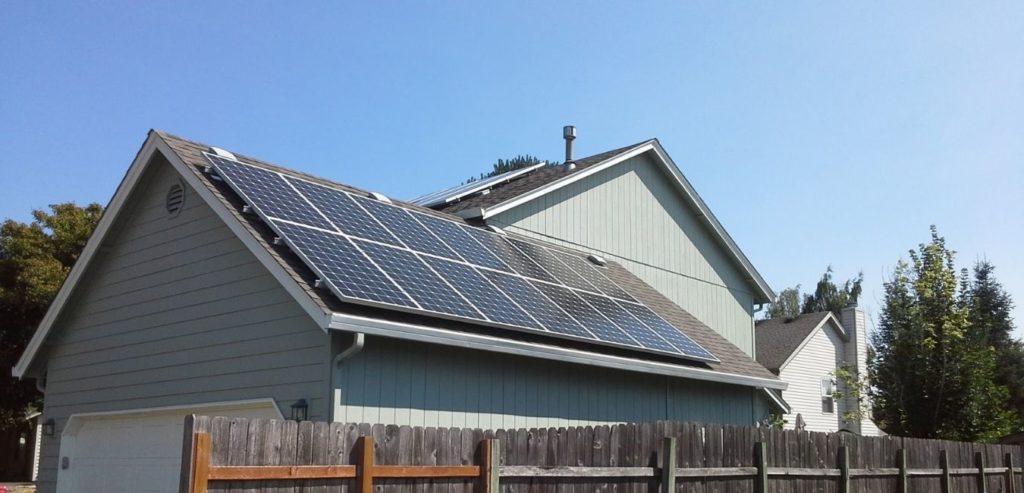
- Most Common & Ideal: Composition or asphalt shingles are the most common roofing material in the Pacific Northwest and are perfect for solar. The installation process is straightforward, allowing our team to complete a typical project in just 2-3 days.
- Excellent: Metal roofs are also fantastic for solar. Standing seam metal roofs are particularly solar-friendly, as we can often attach the panels using clamps that don’t require any penetrations into the roof itself.
- Possible with Expertise: Tile roofs (clay, concrete, or slate) require more specialized equipment and care. Some tiles can be brittle, so our qualified installers use specific techniques and mounts to ensure a secure, leak-proof fit without damaging the tiles.
- Challenging: Wood shake roofs can present challenges due to the nature of the material and local fire safety codes. If you have a wood shake roof, a professional assessment is absolutely necessary to determine feasibility.
Why it matters: The roofing material dictates the specific mounting hardware and waterproofing methods we use. Our 10-year craftsmanship warranty is our promise that your roof will be protected and your solar array will be secure, no matter the material.
Factor 3
The Direction Your Roof Faces
To get the most out of your solar panels, they need optimal exposure to the sun. In the Northern Hemisphere, the sun travels across the southern part of the sky. Therefore, a roof surface that faces south will capture the most sunlight throughout the day and produce the most energy.
- Ideal: A south-facing roof is the gold standard for solar production in Oregon and Washington. This orientation will maximize your energy generation from sunrise to sunset.
- Very Good: Don’t worry if your roof faces east or west! These orientations are still highly effective for solar. An east-facing array captures more morning sun (great for when you’re starting your day), while a west-facing array soaks up the powerful afternoon rays, helping to offset peak energy usage.
- Less Ideal: A north-facing roof is the most challenging orientation as it receives the least direct sunlight. In most cases, we would look for other available roof surfaces. However, a low-slope roof may still have potential.
- Flexible: Flat roofs offer great flexibility. We can use tilted racking systems to orient the panels at the perfect angle (usually south) to maximize sun exposure, regardless of your building’s orientation.
Why it matters: From the stunning views of the Columbia River Gorge to the skyline of Seattle, a southerly orientation is always the most productive. The direction your roof faces directly impacts your system’s energy output and, ultimately, your savings.
Factor 4
Shading on Your Roof
Consistent, direct sunlight is the fuel for your solar panels. Even a small amount of shade from a tree branch, chimney, or neighboring building can have a significant impact on energy production. For a technical look at this topic, you can read this informative article on the effects of shading on photovoltaic systems.
- Ideal: A roof with no shade from 9 a.m. to 3 p.m. is perfect. This will allow your solar panels to operate at their peak efficiency during the most productive hours of the day.
- Good: A little bit of shading in the very early morning or late afternoon is common and usually has a minimal impact on your overall energy production.
- Requires a Custom Design: If you have significant shading, especially during the middle of the day, our solar experts will need to create a strategic design. We use advanced software and sometimes recommend microinverters or optimizers to ensure the rest of your system keeps producing even if one panel is shaded. In some cases, minor tree trimming can make a huge difference.
- Challenging: A roof that is heavily shaded throughout the day is a difficult candidate for solar. In these situations, we can explore other solutions, such as a ground-mounted system if you have available land.
Why it matters: As a top-rated solar company independently verified by the Energy Trust of Oregon, we provide transparent and highly accurate production estimates that meticulously account for any shading on your property, ensuring there are no surprises.
The Professional Metric
Total Solar Resource Fraction (TSRF)
While direction and shade are important concepts, professional solar installers like Sunbridge Solar use a highly accurate, data-driven metric called the Total Solar Resource Fraction (TSRF).
In simple terms, TSRF is the percentage of total possible sunlight that your roof actually receives over an entire year. A “perfect” roof with a southern exposure and zero shade would have a TSRF of 100%. The calculation combines a roof’s orientation (direction) and pitch (angle) with a detailed analysis of any “shade obstructions” from trees, buildings, or other structures throughout all hours of the day and all seasons of the year.
- What’s a good TSRF value? Generally, a TSRF value of 75% or higher is considered good for a solar installation. Areas with a TSRF below 70% may not be economically viable for panel placement.
How we use it: We don’t guess when it comes to your home’s energy production. As part of our free design process, we use advanced solar design software to create a precise 3D model of your home and its surroundings. This model calculates the TSRF value for every square foot of your roof. This allows us to design a system that maximizes your return on investment by placing panels only on the sections of your roof with the highest solar access, ensuring a more efficient and powerful system.
Why it matters: TSRF provides the most accurate possible projection of your system’s future energy output. This data-driven approach is a key part of our commitment to transparency and is crucial for designing a system that meets your financial and energy-saving goals.

Your Next Step
A Free, No-Obligation Consultation
While this guide provides a solid overview, the only way to get a definitive answer is with a professional site assessment. The team at Sunbridge Solar is here to provide you with a completely free, no-obligation consultation. We’ll use advanced satellite and imaging tools to analyze your roof, calculate your precise savings potential, and walk you through all the available solar incentives.
Don’t wait to start saving! The long-term benefits of solar energy are immense, and with our fast 2-3 day installation time, you could be generating your own clean energy much sooner than you think. Get started today.
Frequently Asked Questions
Will solar panels damage my roof in Oregon?
As a top-rated solar installer with a 10-year craftsmanship warranty, we guarantee our work. We use proven, industry-leading mounting and flashing techniques to ensure your roof remains watertight and structurally sound. A properly installed solar panel system from a reputable company like Sunbridge Solar will protect the portion of the roof it covers, potentially even extending its life.
What happens if I need to replace my roof after installing solar panels in Washington?
This is why we emphasize the importance of your roof’s age and condition before installation. If you do need to replace your roof, the solar panels and racking will need to be removed and then reinstalled. This is a service we provide, but it’s an additional cost. To avoid this, we recommend addressing any roofing needs before going solar.
How much roof space do I need for a residential solar installation?
The amount of space needed depends on your energy consumption. A typical residential system in Oregon or Washington might require 300 to 600 square feet of unobstructed roof space. During our free assessment, we’ll design a system tailored to your specific energy needs and available roof area.
Can you install solar panels on a historic home in Portland or Seattle?
Yes, it is often possible to install solar on historic homes, but it may require special permitting and design considerations to comply with local historic preservation guidelines. Our experienced team can help you navigate this process to find a solution that respects your home’s character while providing clean energy.
Take Control of Your Energy Future Today!
Ready to see how much you could be saving with solar? Take the next step towards energy independence and a lower electric bill. Our friendly, knowledgeable team is ready to answer all your questions and design the perfect solar solution for your home or business.
Fill out our free consultation form online or call us today at 360-313-7190 for a free, no-obligation estimate!