
What is the Best Angle for Solar in Portland?
Your solar panels will need to capture the most amount of sunlight to generate the maximum amount of solar energy. To produce more power you will need to orient your solar panels in the correct direction and determine the optimal angle. According to EnergySage, the best angle for solar panels in Portland, Oregon is 46 degrees.
Both the optimal angle and orientation depend on your location on the planet. For example, for people living in the northern hemisphere, you will install your solar panels facing the southern sky and opposite direction for the southern hemisphere. This is because you want to angle your solar panels toward the equator because that is the path the sun follows.
What Direction Is The Best?
The best angle may also depend on how much solar power you want to produce and when. For example, to get the best performance out of your solar panels you would face them due south at the optimum angle so that the panel is receiving as much sunlight as possible at this time. You can achieve this by installing an automated mechanical solar tracker.
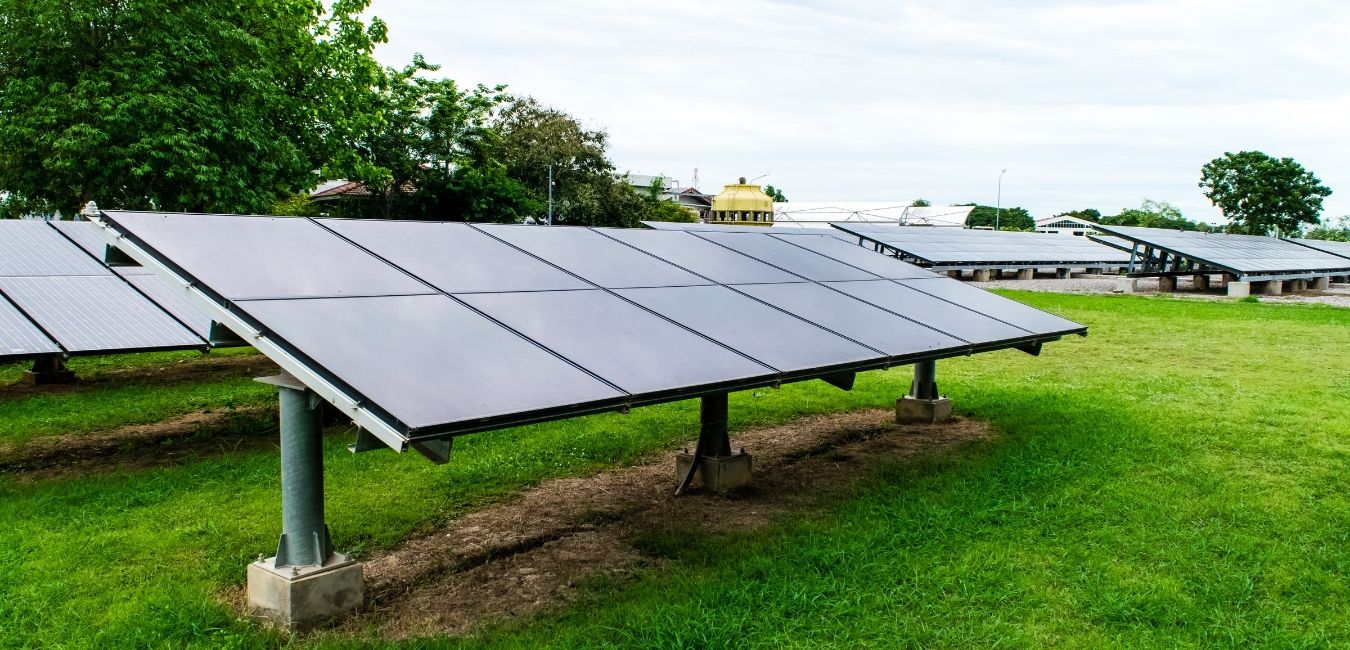
Flat Versus Angle Solar Panels
This topic has been researched thoroughly in the solar industry and it boils down to the economics of both. Yes, you are able to generate more power when you have an automated mechanical solar tracker, but you will also pay a higher upfront cost because of needed materials and will need to maintain your system thoroughly for the 25 years the system is warrantied.
So how much efficiency do I lose if I chose flat solar panels? Research suggests that with an automated solar tracker, you will gain only 0.6 kilowatts (600 watts) while paying for a more expensive and more laborious solar panel system. It is sometimes possible to generate more power when you install flat solar panels for less the price of an automated solar tracker. The only drawback is you will need more available space.
Automated Solar Tracking Versus Flat Solar Panels
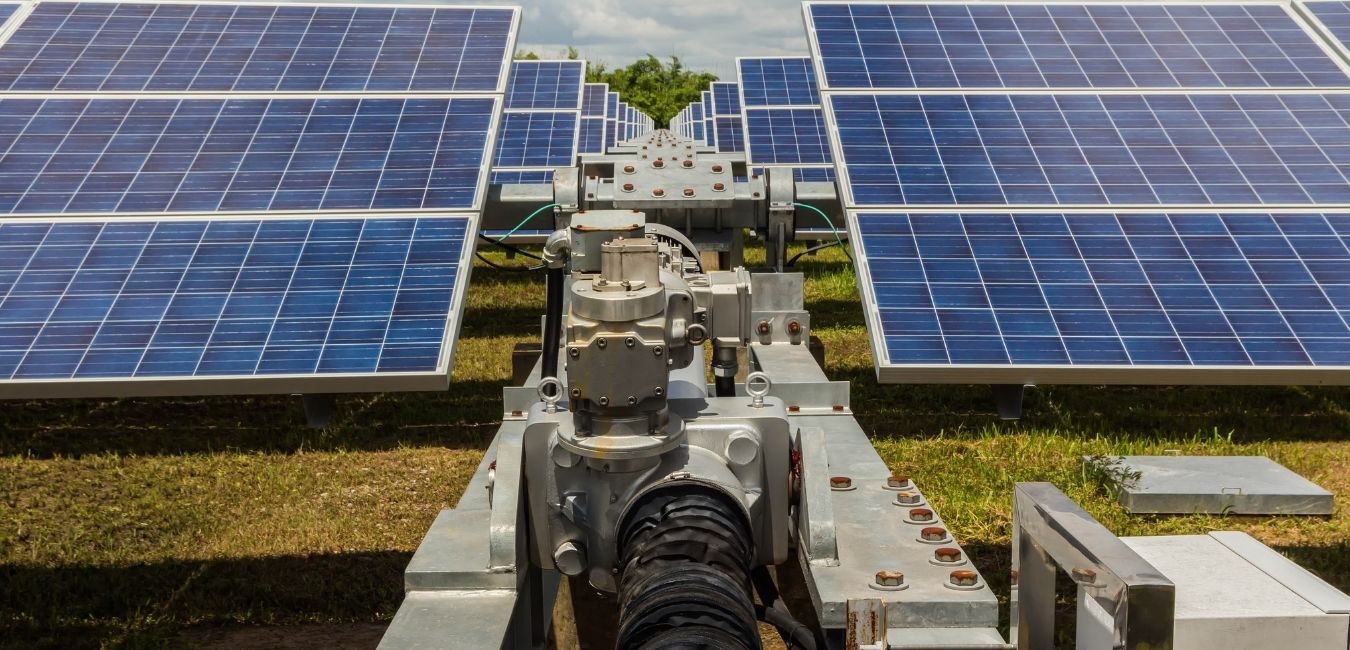
You can benefit from more solar power if you have the ability to automatically adjust your solar panels on a minute-by-minute basis. These systems are called automated mechanical solar trackers and while they can maximize your solar production they are unfortunately not very economical.
We recommended non-automated or flat roof panels because they have a better rate of return on your investment and 25-year zero maintenance compared to a mechanical tracker with moving parts.
Find Out Your Optimal Solar Angles
When you get a quote at Sunbridge, we’ll provide you a solar analysis that shows you the most optimal system for your home or business. Not all roofs are the same, that is why all our reports are custom made. Get your report today!
Frequently Asked Questions
What is the best angle for solar panels in Portland?
Roughly your latitude, around 40 to 45 degrees from horizontal, facing south gives the best annual production in the Portland area. In practice most homes simply use the existing roof pitch, and the loss compared with a theoretical optimum is smaller than people expect.
Does my roof have to face south?
No. South is best, but southwest, west and east-facing roofs all produce usefully here, typically within 10 to 20 percent of a south-facing array over a year. A west-facing roof can even suit households that use most of their power in the late afternoon.
Is it worth adding tilt frames to a low-pitch roof?
Rarely on a home. Tilt frames add cost, wind loading and visual bulk for a modest annual gain, and on a low-slope roof they can create shading between rows. We generally recommend using the roof as it is and adding a panel or two instead.
Does panel angle matter more in the Pacific Northwest?
Less than shade does. Our diffuse light means orientation is more forgiving here than in a sunnier climate, while a single fir at the wrong bearing can cost far more production than a suboptimal pitch ever will.
How do you work out the right angle for my roof?
We model your specific roof across a full year, including winter sun angles and any shading, rather than applying a rule of thumb. That model is what the production estimate in your quote is based on.