
Do I Need Permits to Install Solar in Washington State?
Going solar is a transformative decision for any Washington homeowner or business owner. It is a powerful step toward energy independence, significantly lower electricity bills, and a more sustainable future for the Pacific Northwest. However, as you begin your research, scrolling through forums or talking to neighbors, one of the first and most intimidating questions that arises is about the legal red tape:
“Do I really need permits to install solar panels on my own roof?”
The short answer is a clear and resounding yes.
Securing the proper permits is not just a bureaucratic hoop to jump through; it is the backbone of a safe, effective, and legally compliant energy system. It protects your investment, your family’s safety, and the stability of the regional electrical grid.
At Sunbridge Solar, we know that the world of municipal codes and electrical diagrams can seem overwhelming. With over 15 years of experience installing solar systems across Washington and Oregon, we have mastered this process. We handle every single detail, from the initial paperwork to the final handshake with the inspector, to provide you with a completely turnkey, stress-free experience.
Here is your comprehensive guide to the solar permitting process in Washington, why it matters, and how we make it easy.
Why Does Washington Require Solar Permits?
Before we dive into the specific forms and fees, it is helpful to understand why Washington State maintains such rigorous standards. These regulations aren’t designed to slow you down; they are in place to protect you from liability and physical danger.
The entire framework of solar permits in Washington state is built on a foundation of safety and quality control. Think of a permit as a “seal of approval” from your local authorities. It certifies that your project’s design and final installation meet the rigorous safety standards established by the National Electrical Code (NEC) and local building ordinances.
1. Fire and Electrical Safety
Your solar panel system is effectively a private power plant on your roof. It generates high-voltage DC electricity that must be converted to AC electricity for your home.
- The Risk: Improper wiring, undersized conduits, or faulty grounding can lead to arc faults, a leading cause of electrical fires.
- The Solution: An electrical permit ensures that a licensed professional has designed the system to handle the voltage safely and that it integrates correctly with your home’s existing electrical panel.
2. Structural Integrity (The “Rain and Snow” Factor)
In Washington, our roofs face unique challenges. We have months of relentless rain in the west and heavy snow loads in the east.
- The Risk: Solar panels add significant weight (dead load) to your roof. Without proper engineering, this can cause sagging, leaks, or even structural failure during a heavy snowstorm.
- The Solution: A building permit verifies that your roof structure can support the load and that the racking is attached with waterproof flashings that will survive a PNW winter.
3. Protecting Property Value
A permitted solar installation is a documented asset. When you eventually sell your home, savvy buyers and inspectors will demand proof of permits.
- The Fact: An unpermitted system is a major red flag. It can derail a sale, force you to lower your asking price, or even require you to pay thousands to remove the system.
- The Benefit: By following the correct solar permitting process in Washington, you ensure your investment is recognized as a legitimate, value-adding home improvement.
The “Two-Tier” Permit System in Washington
This is a detail that trips up many DIYers and inexperienced installers. In Washington State, jurisdiction is often split. Depending on where you live, you may need approvals from two completely different government bodies.
1. The Electrical Permit (L&I vs. City)
This is the most critical of the Washington solar installation permits.
- State Jurisdiction: For many parts of Washington, electrical permits and inspections are handled directly by the Washington State Department of Labor & Industries (L&I). If you are in a smaller town or unincorporated county area, L&I is likely your authority.
- City Jurisdiction: Larger cities like Seattle, Tacoma, Bellevue, and Spokane have their own electrical departments. In these cases, you apply directly to the city, not the state.
Knowing who to ask is half the battle. Sunbridge Solar’s team knows exactly which jurisdiction your home falls under, ensuring no time is wasted filing with the wrong office.
2. The Building / Structural Permit
While the electrical side handles the wiring, the building permit handles the physical mounting. This is almost always handled by your local City or County Planning Department.
- Uplift and Wind Load: Planners will review our engineering data to ensure the panels won’t rip off during a high-wind event.
- Setbacks: Fire codes require specific pathways (setbacks) on the roof so firefighters can access the ridge in an emergency. The building permit ensures your design leaves enough room.
The Utility Interconnection Agreement: The “Third Permit”
For grid-tied systems, which make up 99% of residential installations, you need permission from your utility company. This isn’t a government permit, but it is legally required to turn your system on.
Whether you are a customer of Puget Sound Energy (PSE), Snohomish PUD, Seattle City Light, or Avista, you must sign an Interconnection Agreement.
Why is this required?
- Net Metering: This agreement enrolls you in Washington’s Net Metering program, allowing you to earn credits for the excess energy you send back to the grid.
- Grid Safety: It ensures your inverter has “anti-islanding” technology. This automatically shuts down your solar panels during a neighborhood power outage, protecting utility line workers from being electrocuted by your system while they fix the wires.
A Fact You Might Not Know: Solar-Ready Requirements
Washington State is aggressive about energy efficiency. Did you know that recent updates to the Washington State Energy Code require many new homes to be “Solar Ready“? This means they must have a dedicated zone on the roof and a conduit pathway installed during construction.
Furthermore, correct permitting is vital because it sets the baseline for system efficiency. As noted by industry resources like SolarPlanSets.com, skipping the detailed engineering required for a permit can lead to suboptimal panel placement, where homeowners lose potential energy production simply because the “path of least resistance” was chosen over the “path of maximum sun.” A permitted set of plans forces the installer to stick to the optimized design.
The Sunbridge Solar Permitting Process: Step-by-Step
We believe in total transparency. Here is the journey your project takes from our office to your roof.
Step 1: The Site Assessment & Engineering
We send a technician to measure your roof planes, inspect your rafters, and analyze your main electrical service panel. Our engineers then draw a “One-Line Diagram”, the electrical blueprint required by the state.
Step 2: Submission & Management
We submit the package to L&I (or your local city) and your utility provider.
- Insider Note: Some jurisdictions still use paper applications, while others like Seattle are fully digital. We know the preference of every clerk in the state.
Step 3: The “Wait & Review”
Plan reviewers check the math.
- Timeline: This can take anywhere from 2 to 8 weeks depending on the city’s backlog. Seattle and Clark County can be slower; smaller counties are often faster. We proactively follow up so your application doesn’t sit in a pile.
Step 4: Installation & Inspection
Once the permit is issued, we install. But we aren’t done yet.
We schedule the L&I inspector (or city inspector) to come to your home. We stand with them while they open the combiner boxes and check the torque on the breakers.
Step 5: Permission to Operate (PTO)
Once the inspector signs off, we send that “passed” report to the utility. They flip the digital switch on their end, and you get the green light to turn your system on!
A Note on HOAs in Washington
Many homeowners worry their Homeowners Association (HOA) will deny their permit application.
Good news: In Washington State, RCW 64.38.055 severely limits an HOA’s ability to ban solar panels. While they can impose reasonable aesthetic rules (like requiring frames to match the roof color), they cannot prohibit the installation or require changes that significantly reduce the system’s efficiency or increase its cost. Sunbridge Solar helps you prepare the design packet for your HOA architectural review board to ensure a smooth approval.
Commercial vs. Residential Permits
Residential Solar Permits WA:
Generally standardized. The focus is on roof integrity (especially for composition shingle or metal roofs) and standard electrical tie-ins.
Commercial Solar Permits Washington:
Much more complex.
- Zoning: We may need to navigate zoning laws regarding visual impact.
- Structural: Flat commercial roofs often require advanced structural analysis to handle the weight of ballasted (weighted) racking systems.
- Scale: Large systems may require transformer upgrades from the utility.
Sunbridge Solar has a dedicated commercial team that specializes in these high-complexity projects.
Choose the Experts Who Make Permitting Painless
Navigating the complex web of Washington state solar regulations is a full-time job, and it’s ours.
When you try to DIY solar or hire an inexperienced “truck and a ladder” installer, the permitting process is where the nightmare often begins. Plans get rejected for minor errors, inspections fail because of code nuances, and months go by without power.
When you choose Sunbridge Solar, you are getting a dedicated partner who handles 100% of this administrative burden.
- We know the inspectors.
- We know the codes.
- We know the weather.
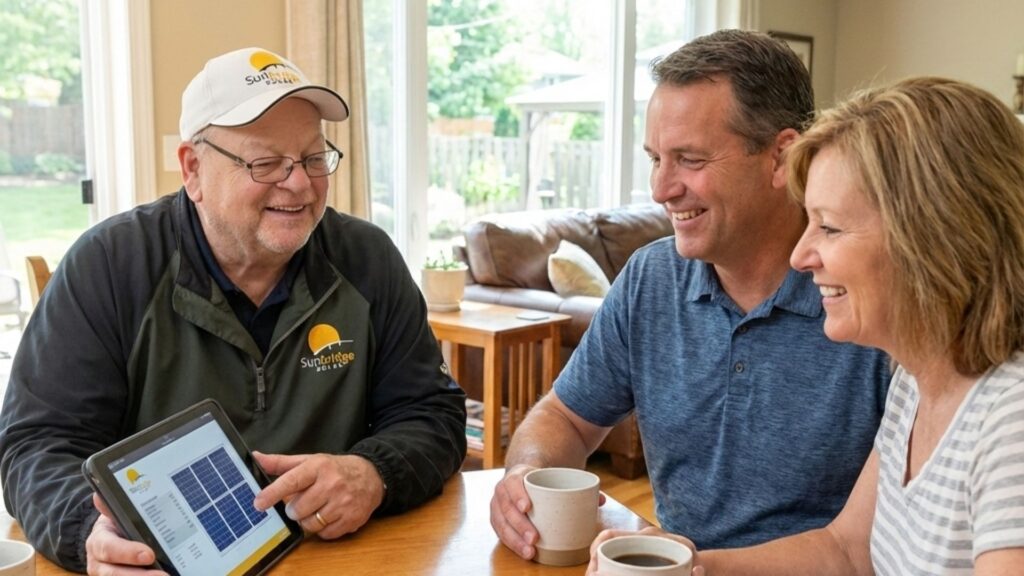
Your peace of mind is our top priority. That’s why every installation we complete is not only fully permitted and inspected but also backed by our industry-leading 10-year craftsmanship warranty and 25-year product warranties.
Don’t let the paperwork scare you away from energy independence.
Contact Sunbridge Solar today to schedule your free, no-obligation consultation. We’ll show you just how simple and rewarding going solar can be.