
2026 equipment update. The current Enphase batteries are the IQ Battery 5P (5.0 kWh usable, 3.84 kW continuous) and the newer IQ Battery 10C (10 kWh usable, 7.08 kW continuous), both lithium iron phosphate with a 15-year, 6,000-cycle warranty. Note also that the federal residential solar tax credit is no longer available for new residential systems, so any cost figure that assumes 30% back is out of date.
Enphase Batteries are popular solar batteries that act as a great battery backup to power your home or business in the Pacific Northwest.
Enphase Energy has created these backup power batteries to help homeowners save on energy costs. All while laying the groundwork for several benefits and technologies to track energy usage.
Are you curious about the benefits of using an Enphase Battery as a backup power solution? This guide focuses on the states of Oregon and Washington.
Keep reading to find out more!
Why Use Backup Batteries? Well, Solar Energy is Not Always Reliable
Because of the unique nature of solar energy in the Pacific Northwest, storing that energy when it is not in use is a unique challenge.
Bill Gates had to confront this problem when he started investing in energy companies that made batteries. Solar systems are not as easy to store power in as energy produced from things like fossil fuels. Because solar energy is not a constant source.
The amount of energy you get from your solar panels fluctuates. This is because of the time of day, weather conditions, cloud conditions, and other factors.
This energy fluctuation problem means that you will need many batteries to store your excess energy. All to make up for when the energy is lacking. These huge batteries will eat up your resources. And could increase your electric bill instead of decreasing it.
The average US electric customer uses 10,715 Kilowatt-hours (kWh) every year. It requires a massive battery that would weigh more than a ton to store it all when you aren’t getting enough solar power. This number goes up every year as our society relies more and more on electronics in daily life.
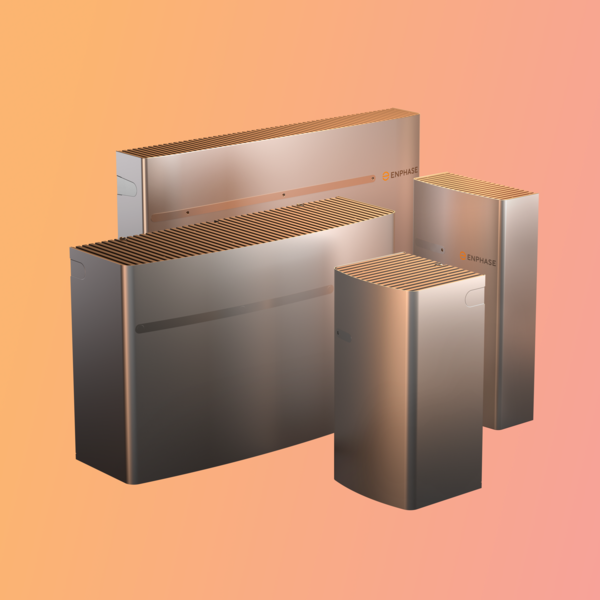
What are Enphase Backup Batteries, and How do They Work?
Enphase backup batteries are a cluster of batteries integrated with most solar panel systems. They act as a different way to store the energy that your solar panels absorb.
Enphase backup systems use a technique called “all-in-one-AC-coupled storage systems.” Which increases the homeowner’s solar self-consumption, saving as much as possible by using solar energy.
AC Coupled Storage System
Enphase Batteries use a unique configuration known as AC coupled. This configuration means that the batteries, manufactured with a unique micro-inverter, can convert Direct Current (DC) into Alternating Current (AC) power.
AC power is essential for sensitive electronic devices like computers, and smartphones. And most other technology that is becoming prevalent in homes.
Lithium Iron Phosphate LFP
Enphase batteries use Lithium Iron Phosphate instead of traditional lithium-ion batteries.
With this material, Enphase batteries have more longevity. And the batteries are safer from risks like lithium buildup, fire risk, and degradation.
They will have better storage capacity over time since they have less of a tendency to degrade.
Solar Panel Systems that use Enphase ensembles for battery storage will get much more value than traditional solar storage solutions.
Enphase IQ Batteries
Enphase describes its line of micro-inverter batteries as IQ batteries. This label means that these batteries are part of the third generation of solar battery storage capacity and that they have no moving parts that will break over time.
How Do Enphase Batteries Work?
Enphase batteries work by storing excess solar energy above what you are currently consuming in the Enphase backup grid. That stored energy stays in the grid for later use.
In the morning, your solar panels will absorb a medium amount of sunlight and use a decent amount of energy. Depending on your usage, you may need to tap into the energy stored from the night before if your solar panels have trouble getting enough energy.
You will see your most significant spike of incoming solar energy from your solar energy system at midday. Your system will store the excess energy into your Enphase batteries for later use when you overtake your solar input.
People also have the lowest energy consumption during the middle of the day. As many people are out working, in school, or performing other tasks in the middle of the day.
During the next afternoon, your battery will fill up and may become full. Depending on your consumption. At this point, you will be able to begin exporting energy back to the grid and save yourself money.
In the evenings, house members’ energy usage will spike. And you won’t be getting any solar energy to replenish it because the sun is down.
Over half of the energy usage used in households every day happens during the evening.
Increasing the Effectiveness of your Solar Panels
This fact is why having an effective battery like an Enphase battery is essential. Without a good backup battery, you will run out of stored solar energy and have to start using power from your power grid to compensate.
Using grid power during peak power time will increase the power cost. This cost is because the price of grid power goes up during peak usage hours.
The process starts over again in the morning. Your results will vary depending on how much solar energy you can hold onto during the night.
What Are the Costs Associated With an Enphase Battery System?
Enphase batteries will cost around $3,000. With some models reaching upwards of $7,000 or $9000 for the sale price of the model.
Another cost that Enphase batteries will have is the installation cost. A trained solar professional will need to install these batteries to ensure they can be grid-tied.
The installation costs of an Enphase battery system can add an extra $1000 to $2000 to your bill. These installation costs can vary depending on the area of your home and which installer you choose.
Another potential cost to consider is that some Enphase batteries will be incompatible with some solar panel systems. Especially older ones. While Enphase batteries are compatible with most solar energy systems, some will need an upgrade to accommodate Enphase batteries.
The cost of upgrading an existing electric panel, or getting a backup subpanel installed for Enphase batteries can add another $1000 or more to costs.
Are there Incentives Available?
Yes! In both Oregon and Washington state, they offer incentives for adding batteries.
What Types of Enphase Backup Battery Systems are Available?
There are a few different Enphase systems available for homeowners and business owners.
IQ Battery 3
The IQ Battery 3 has an energy capacity of 3.36 kWh and includes four with a 1.28 kW power rating. It has a ten-year limited warranty and consists of a fully integrated AC battery system.
You also get access to a mobile app for monitoring and battery control.
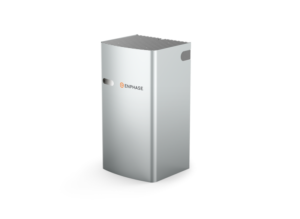
IQ Battery 3T
The IQ Battery 3T has similar specs to the IQ Battery 3, but it has a smaller size and weight.
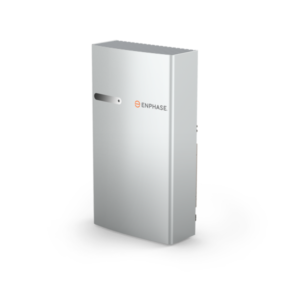
IQ Battery 10
The IQ Battery 10 has an energy capacity of 10.08kWh and comes with twelve micro converters with a 3.84kW power rating.
The IQ Battery 10 package has 3 IQ Battery 3 Storage Units with a 10-year limited warranty.
The mobile app includes an IQ Battery 10 purchase, grid-forming capability, and support for self-power consumption.
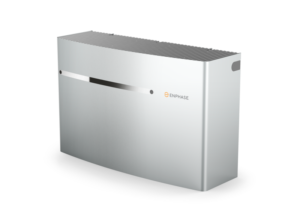
IQ Battery 10T
The IQ Battery 10T has the same specs as the Battery 10, but instead of IQ Battery 3s, it comes with IQ Battery 3Ts instead.
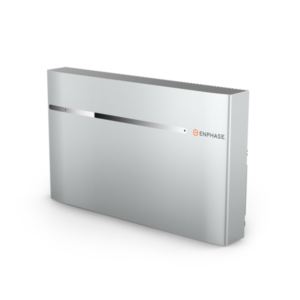
Enphase Battery Benefits
Enphase batteries have several benefits that make using them for your solar panel system very appealing.
Performance Monitoring
Because Enphase batteries contain micro-inverters made throughout the battery, it makes it much easier to get a more accurate sense of how well the battery is performing.
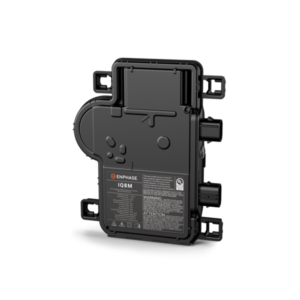
You can track individual panel performance from your smartphone and get notifications for when your power performance is less than it should be.
You will be able to see the effects of a cloudy day versus a sunny day, and you will be able to get clues to investigate other potential problems with your system.
Certain things like bird droppings, debris, and equipment damage are easier to detect.
Reliable
Enphase batteries have safer components that will be more reliable. And they will last longer than traditional solar batteries.
They are also safer than these traditional lithium-ion batteries. And they will be less likely to catch fire, suffer battery degradation, and fail due to temperature fluctuations.
This reliable tendency means they will perform better in adverse outdoor weather conditions. Enphase batteries are NEMA 3 rated, and thus certified for practical use in outdoor spaces.
Emphase batteries contain a semiconductor designed to handle points of failure. And Enphase batteries have passive cooling technology to deal with overheating.
Final Thoughts
Backup batteries are crucial for the future of solar energy. Regardless if you use a hybrid solar energy system or another type of solar energy system. They are a great backup plan for when solar isn’t so reliable.
Suppose people can understand and use these technologies in their solar power generation. In that case, they will be able to save money on their electric bill. And make a positive change for the planet and the people around them.
Get a Quick Solar + Battery Estimate in a Few Minutes
Frequently Asked Questions
How much does an Enphase battery system cost?
Cost depends on how many batteries you need and what you are backing up, not on a sticker price. The real driver is your critical-loads list, refrigeration, heat, water and connectivity need far less capacity than whole-home backup. We quote from your actual loads after a site visit.
How many Enphase batteries do I need?
Most Pacific Northwest homes backing up essentials rather than the whole house start with one or two units. Whole-home backup, electric heat or a well pump push that number up quickly, which is why the loads conversation comes before the hardware one.
What makes Enphase batteries different from a Tesla Powerwall?
Enphase uses a distributed architecture, multiple smaller units with no single point of failure, while Powerwall is a single larger unit. Both work well here; the right choice depends on your loads, your space and whether you already have Enphase microinverters.
Can I add an Enphase battery to solar I already have?
Often yes, and it is a common upgrade. What determines it is your existing inverter setup and electrical panel capacity. We assess both before quoting rather than assuming compatibility.
Will an Enphase battery run my whole house?
It can, with enough units, but that is rarely the sensible design. A critical-loads setup keeps heat, refrigeration, water and internet running for far longer on far less battery, and costs considerably less to install.
What has changed about the cost side in 2026
The single biggest change to battery economics is not the hardware. It is that the federal residential credit expired at the end of 2025. Any battery quote, calculator or article that shows 30% coming back from the IRS is describing a world that no longer exists, and the real net cost is correspondingly higher. If you are holding a quote like that, get it redone before you compare offers. We explain the current position here.
What has not changed is that in Oregon, Energy Trust does still offer a separate battery storage incentive, with different amounts for PGE and Pacific Power customers and higher amounts for income-qualified households. Those step down in stages through the year, so the figure that matters is the one current on the day you are quoted. In Washington there is no equivalent statewide storage incentive.
The current hardware, briefly
- IQ Battery 5P, 5.0 kWh usable, 3.84 kW continuous, LFP chemistry, 15-year and 6,000-cycle warranty.
- IQ Battery 10C, 10 kWh usable, 7.08 kW continuous, LFP, same warranty terms, and a considerably smaller footprint per kilowatt-hour.
- Both need an IQ System Controller to island your home from the grid safely during an outage.
For the full breakdown of how the system fits together, see our Enphase Energy System review.
The honest answer on whether it pays
In this region, usually not on energy savings alone, and we would rather say that than sell you a spreadsheet that only works if you squint.
Residential rates here do not reward shifting energy around the clock the way California’s do. Clark PUD, Cowlitz PUD, PGE and Pacific Power customers are all, in different ways, already covered for the seasonal swing by net metering: your summer surplus is banked and drawn down in winter. A battery does not add much to that arrangement financially.
What a battery is genuinely worth here
Resilience, and for some households that is worth a great deal:
- A well pump. On a well, an outage means no water, not just no lights. This is the single most common reason our rural Clark and Cowlitz County customers buy storage.
- Medical equipment, where an outage is not an inconvenience.
- Working from home, where a lost day has a real number attached to it.
- Being late in the restoration queue. Rural east county and Gorge-adjacent roads are not first on the list after a wind event, and residents there know it.
Sizing it for a Pacific Northwest winter
Three things decide whether you are happy with your battery in January:
- Which circuits you back up. Furnace fan, fridge, well pump, internet and a few outlets will stretch across days. Electric heat or a range will drain any residential battery in an evening. This is the design decision that matters most.
- Expected outage duration, not peak load. Gorge wind events and wet snow bring outages measured in hours to days here.
- How little your array recharges it in December. Winter is when you need the battery and when your panels produce least. Size for two nights rather than one.
An unheated garage in Vancouver, Camas or Washougal is a fine place for one. At elevation or in an exposed outbuilding, siting deserves a closer look.
Is there still a 30% federal tax credit on home batteries?
No. The federal residential clean energy credit expired at the end of 2025 and is not available for new residential systems. Any quote or calculator still showing 30% back is out of date.
Are there battery incentives in Oregon or Washington?
Oregon has an Energy Trust storage incentive with different amounts for PGE and Pacific Power customers, and higher amounts for income-qualified households, stepping down in stages through the year. Washington has no equivalent statewide storage incentive.
How much does an Enphase battery store?
The IQ Battery 5P holds 5.0 kWh usable with 3.84 kW continuous output; the IQ Battery 10C holds 10 kWh usable with 7.08 kW continuous. Both carry a 15-year, 6,000-cycle warranty.
Does a home battery pay for itself in Washington or Oregon?
Rarely on energy savings alone, because residential rates here do not reward time shifting and net metering already covers the seasonal swing. Batteries here are bought for outage resilience.
How many batteries do I need?
It depends on which circuits you back up and how long your outages last, not on the size of your house. Households on wells or with medical equipment usually need more capacity than a straightforward lights-and-fridge setup.
Can I add a battery to solar I already have?
Often yes. A system already built on Enphase microinverters is the most straightforward case; other inverter architectures may need additional equipment, which affects the cost.
Want a battery quote built on this year’s numbers rather than last year’s? Call us at 360-313-7190 or request a free quote.